Material Selection · 2026-09-30 · 8 min read
304 vs 316 Stainless Steel for Sanitary Ware: A Project Buyer's Guide
The better stainless steel grade is the one that matches the real exposure. A dry office washroom and a coastal public toilet should not be specified from the same assumptions.
Article Topics
Start with exposure, not a grade number
The 304-versus-316 question often arrives too early. A buyer asks for the 'best' grade before anyone has described the room, the water, the cleaning products or the air around the fixture. That reverses the useful order of decisions. First define the exposure; then select the material and finish that can live with it.
Type 304 is widely used for indoor stainless steel sanitary ware because it offers a practical balance of corrosion resistance, fabrication and cost. Type 316 contains molybdenum, which generally improves resistance in chloride-bearing environments. That difference matters near the coast, around some industrial processes and wherever salts or aggressive cleaning residues are likely to remain on the surface.
Grade alone is not a performance guarantee. Fabrication quality, weld treatment, surface condition, drainage and maintenance can decide whether a fixture ages evenly or develops local staining. A well-made, correctly maintained product is a system; the alloy designation is one part of it.
Where 304 is often a sensible choice
For a controlled indoor washroom with normal ventilation and routine neutral cleaning, 304 is often the starting point. Offices, shopping areas, schools and many hotel back-of-house spaces fit this profile when fixtures are rinsed and dried rather than left under chemical residue.
The procurement team should still ask practical questions. Does water pool around the drain? Will maintenance staff use a chloride-based cleaner on nearby tile? Is the basin exposed to wet mops or chemical containers? An indoor label does not automatically mean mild service.
For model comparisons, review the stainless steel wall-hung basin category and stainless steel countertop basins. Use the category pages to discuss shape and installation separately from the final material declaration.
When 316 deserves closer consideration
316 is worth evaluating where chloride exposure is credible rather than hypothetical: coastal air, saline splash, de-icing salt carried into transport facilities, certain industrial wash areas or a maintenance regime that cannot avoid chloride contact. It may also be requested by the project specification regardless of the buyer's preferred baseline.
Do not treat 316 as permission to ignore maintenance. Deposits can trap contaminants, crevices can stay wet, and unsuitable chemicals can still damage a surface. The grade can increase the margin of resistance, but good drainage and cleaning remain necessary.
Outdoor work needs a broader review than alloy selection. The outdoor stainless steel sanitary ware guide covers mounting, public use and service access that a material certificate cannot answer.
Ask for evidence that matches the purchase order
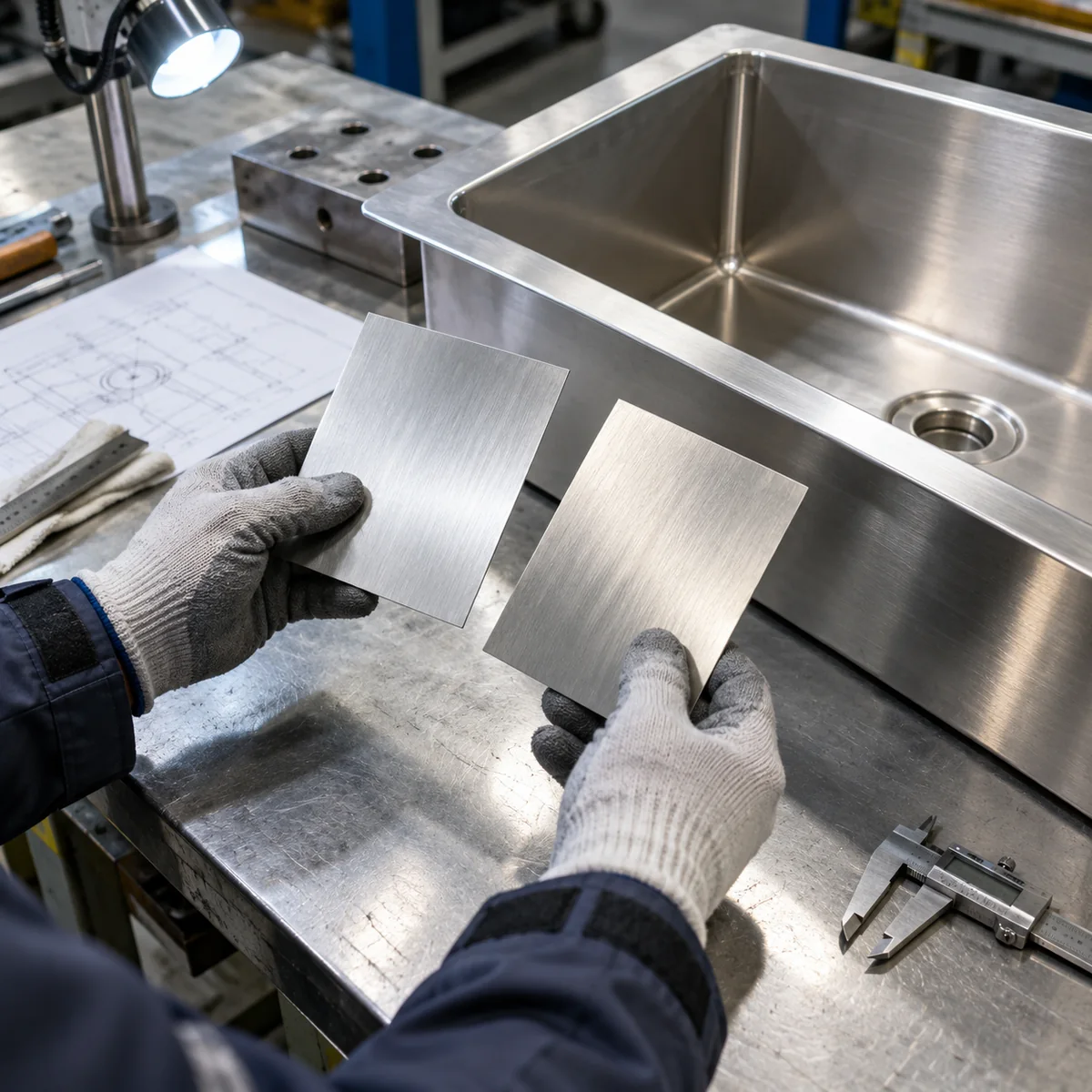
If the grade is critical, write it into the enquiry, drawing and purchase order. A verbal note in an email thread is too easy to lose when similar models are quoted in several finishes. Ask what material documentation can be supplied and make clear whether it must relate to the production batch or is only a general reference.
Keep decorative finish and base material as separate line items. A colored or brushed appearance does not identify the stainless grade underneath. Likewise, a highly polished sample says little about the specified sheet if the order documents do not connect the finish, grade and model number.
For custom work, send the exposure description with the drawing. The custom stainless steel sanitary ware guide explains why dimensions, finish and site use should travel together through approval.
A short decision path for buyers
Begin with location and cleaning method. Record likely salt, chemical and moisture exposure. Check the consultant's specification, then ask the supplier to state the proposed grade for each model. Where the duty is uncertain, review a sample and the maintenance plan instead of relying on a one-word material description.
The final decision should be traceable: grade, finish, model, installation zone and supporting document. That record helps the contractor receive the right item and gives the facilities team a realistic care plan after handover.
To discuss grade options for a defined schedule, contact Honze with model numbers, quantities and site conditions. Avoid asking for 304 or 316 in isolation; the exposure details are what make the answer useful.
Related Categories
Request a Quote
Looking for stainless steel sanitary ware for a commercial bathroom or public restroom project? Contact Honze Stainless Steel Products to discuss product models, dimensions, finishes and custom requirements.
Request a Quote for Your Commercial Bathroom ProjectRelated Products
Product models mentioned for project comparison
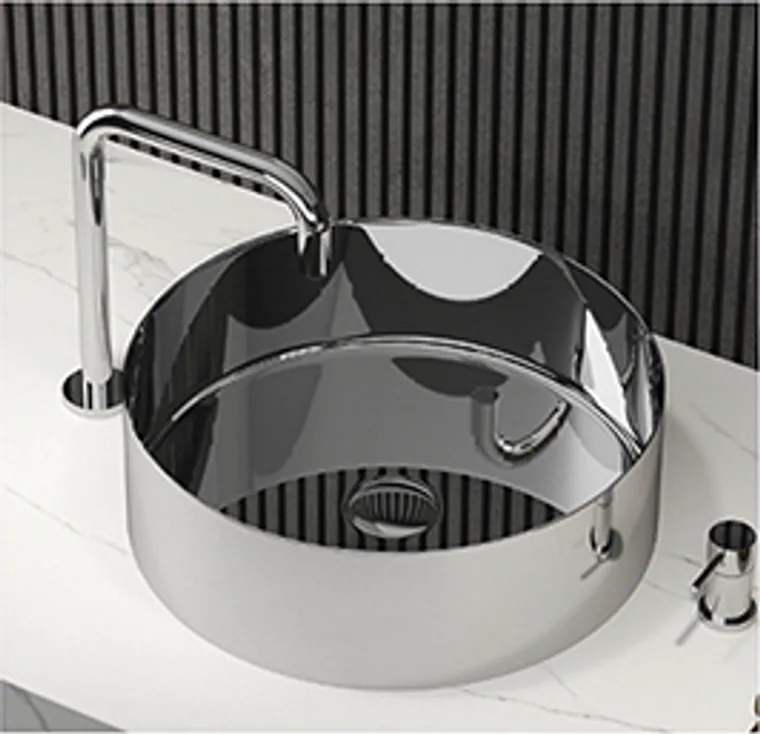
8802-chrome Chrome Deep Bowl Countertop Basin
400 × 400 × 120 mm
Model 8802-chrome is a 400 x 400 x 120 mm stainless steel countertop basin using a deep bowl form for project washroom specification and for fixture replacement schedules.
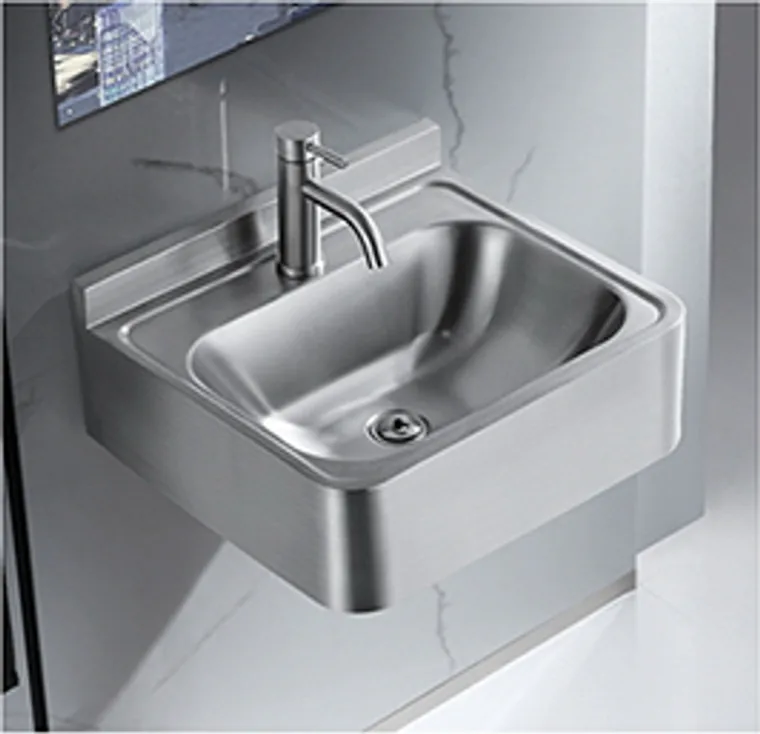
8201 Silver Vandal Resistant Wall Hung Basin
500 × 412 × 150 mm
Model 8201 is a project-ready vandal resistant stainless steel wall hung basin for compact public wash areas, with finish coordination available for distributor product selection.
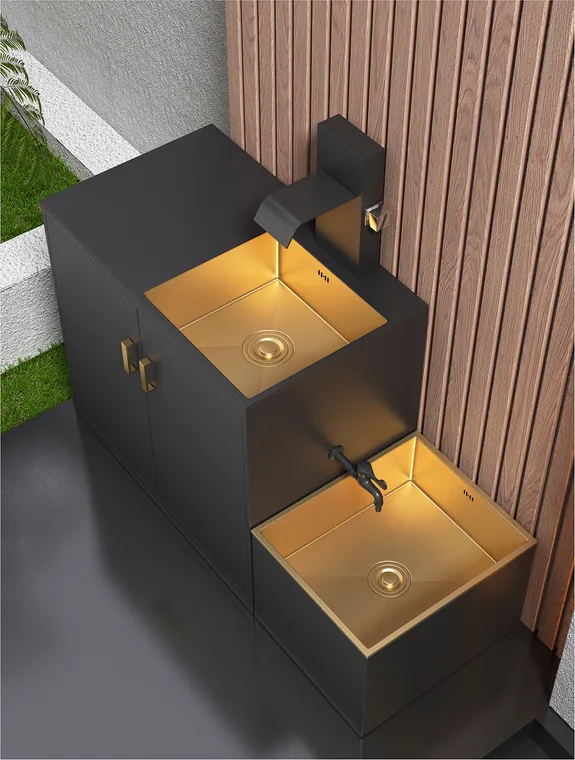
8401-wall-cabinet Black / Gold Accent Round Outdoor Fixture
Custom size / see drawing
Model 8401-wall-cabinet is a black / gold accent round stainless steel outdoor fixture sized Custom size / see drawing, suitable for parks, public landscapes and outdoor restroom areas and for compact vanity planning.
Related Articles
More buying guides for this topic
Material Selection
How to Choose Surface Finishes for Stainless Steel Bathroom Products
Surface finish selection should balance design intent, cleaning frequency, scratch visibility, lighting conditions and product category.
Project Applications
Outdoor Stainless Steel Sanitary Ware for Parks, Stadiums and Public Toilets
Outdoor public toilets need stainless steel sanitary ware selected for wet conditions, cleaning access, drainage, vandal exposure and project handling.
Custom Projects
Custom Stainless Steel Sanitary Ware: From Drawing to Project Use
Custom stainless steel sanitary ware should move from drawing to quotation through clear dimensions, finish, installation, quantity and project use cases.
FAQ
Is 316 stainless steel always necessary for sanitary ware?
No. The choice depends on exposure, cleaning chemicals, water conditions, project specifications and maintenance. Many controlled indoor projects use 304 successfully.
Does a brushed or colored finish prove the stainless steel grade?
No. Surface appearance and base material grade are separate specifications and should both be stated in the order documents.
Is 316 stainless steel maintenance-free?
No. It still needs suitable cleaning, rinsing, drainage and protection from deposits or incompatible chemicals.
What should a buyer include in a grade enquiry?
Include the fixture model, location, water and salt exposure, cleaning routine, finish, quantity and any required material documentation.