Basins · 2026-07-02 · 8 min read
What Project Buyers Should Check Before Ordering Stainless Steel Wash Basins
A stainless steel wash basin order should confirm model type, dimensions, drain position, mounting method, finish, quantity and cleaning access before quotation.
Article Topics
A basin order needs more than a product name
Project buyers should confirm the site conditions first
A request for a stainless steel wash basin should include more than a photo or a model name. Commercial projects need clear information about basin type, dimensions, installation method, drainage position, finish, quantity and the site where the basin will be used.
A basin that fits one hotel counter may not fit a school wall, a public toilet block or a hospital cleaning area. Before ordering, buyers should connect the basin to the wall, counter, plumbing and cleaning routine.
Start by comparing the main basin families: stainless steel pedestal basins, stainless steel countertop basins, stainless steel counter basins and wall-hung stainless steel basins.
Checklist item 1: basin type and installation method
Mounting style affects cleaning and site work
Pedestal basins create a visible standalone fixture. Countertop basins depend on counter design and cut-out planning. Counter or undermount basins need accurate opening details. Wall-hung basins depend on wall strength and service access. Choosing the type late can change plumbing and counter work.
For model comparison, review the 8702-1 stainless steel pedestal basin, the 8802 stainless steel countertop basin, the 8301 stainless steel counter basin and the 8201 stainless steel hanging basin.
If the project includes several basin types, list them separately. Mixing basin families in one line item can create confusion when dimensions, finishes and quantities are reviewed.
Checklist item 2: drainage, faucet and service access
Small plumbing details can block installation
Drainage position should be confirmed before the order is placed. A basin may look suitable but fail on site if the drain center, trap space or wall plumbing conflicts with existing work. Countertop and counter basins also depend on the counter thickness and cut-out details.
Faucet position matters as well. Some projects use wall-mounted faucets, while others need deck-mounted fittings or separate counters. Buyers should confirm whether the basin itself needs a faucet hole or whether the faucet is handled by the surrounding work.
If the restroom is open to the public for long hours, the easier-to-clean structure may be more valuable than a more complex decorative design. Check whether maintenance staff can reach the drain, back edge and underside after installation.
Checklist item 3: finish and project environment
Select finish by maintenance expectation
Gold, brushed, black and other stainless steel finishes can support different interior styles, but each finish should be reviewed against cleaning frequency and scratch visibility. A premium-looking surface may need more careful handling during installation and maintenance.
Use the stainless steel surface finish guide to compare finish choices. If the project requires a custom size or special finish, the custom stainless steel sanitary ware guide helps organize drawings and requirements.
For project buyers, the lowest unit price is not always the best reference point. Installation method, cleaning access and replacement cost should also be reviewed before confirming the model. This applies strongly to repeated basin orders.
Checklist item 4: quotation information to send
A complete request shortens the procurement cycle
The quotation request should include model number, basin type, dimensions, finish, quantity, installation method, drainage note, faucet requirement and project use. If the basin must match an existing counter or wall, include drawings or measured site details.
For broader basin planning, compare the stainless steel wash basin buying guide and the stainless steel pedestal basin guide. These existing guides help buyers choose the right basin family before final ordering.
When the checklist is complete, contact Honze Stainless Steel Products for project requirements with the basin list, model references, quantities and site notes.
Tender review points before final approval
Convert the article guidance into a purchasing checklist
Before the wash basin order package is approved, the project team should compare every selected model against the same written checklist. The useful checklist is not a marketing description; it is a decision record that shows why the fixture fits the building, who will install it and how it will be maintained after handover.
The buyer, installer and countertop contractor should review basin drawing, site measurement and faucet plan together. If one party checks only appearance and another checks only price, important conflicts can be missed. A basin, urinal, toilet fixture or service sink should be accepted only after the team has confirmed the installation surface, drainage route, cleaning access and replacement path.
For B2B procurement, this review also protects communication with suppliers. A request that includes duty level, model reference, quantity, finish, dimensions and site condition is easier to quote than a request based only on a product photo. It also gives the buyer a written basis for comparing alternative models without changing the project intent.
Common procurement mistakes to avoid
Most problems come from missing site details
A common mistake is asking for a fixture price before the installation condition is known. That creates a weak comparison because the cheapest option may require extra site work, harder cleaning or faster replacement. The buyer should treat drain mismatch, cut-out error and cleaning gaps as part of the commercial comparison, not as an afterthought.
Another mistake is mixing standard and custom requirements in the same line item. If one restroom zone needs a standard product and another needs custom dimensions, separate them in the purchase schedule. This helps the supplier review each product clearly and helps the buyer track which items depend on drawings, site measurements or finish approval.
Buyers should also avoid assuming that one successful model can be copied across every restroom area. Public zones, staff zones, service rooms, outdoor blocks and high-risk rooms may need different fixture families. A careful schedule may take longer to prepare, but it usually prevents expensive changes after plumbing, walls or counters are already completed.
Handover and maintenance questions
The product must still make sense after installation
Before final order confirmation, ask how the maintenance team will clean the installed fixture, inspect the drain or fittings and replace connected parts. If the answer requires removing surrounding finishes or reaching into hidden gaps, the project may need a different model or a small change to the installation detail.
The handover package should record model numbers, finish, quantities, installed locations and any custom dimensions. This information helps future maintenance teams order the right replacement or compare similar fixtures later. It is especially useful when the same project uses several basin, urinal, toilet or service sink formats.
A practical final check is to walk through one typical user day and one typical cleaning shift. If the fixture supports both without creating obvious access problems, it is more likely to perform well in real project use. That field-level thinking is often more valuable than adding another decorative feature to the specification.
Related Categories
Request a Quote
Looking for stainless steel sanitary ware for a commercial bathroom or public restroom project? Contact Honze Stainless Steel Products to discuss product models, dimensions, finishes and custom requirements.
Request a Quote for Your Commercial Bathroom ProjectRelated Products
Product models mentioned for project comparison
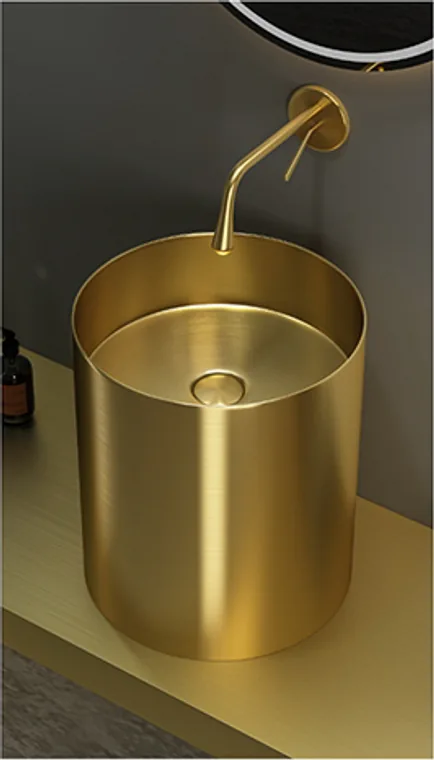
8702-1 Gold Thin-Rim Round Pedestal Basin
400 × 400 × 400 mm
Model 8702-1 is a gold thin-rim round stainless steel pedestal basin sized 400 x 400 x 400 mm, suitable for commercial washrooms and hospitality bathrooms and for compact vanity planning.
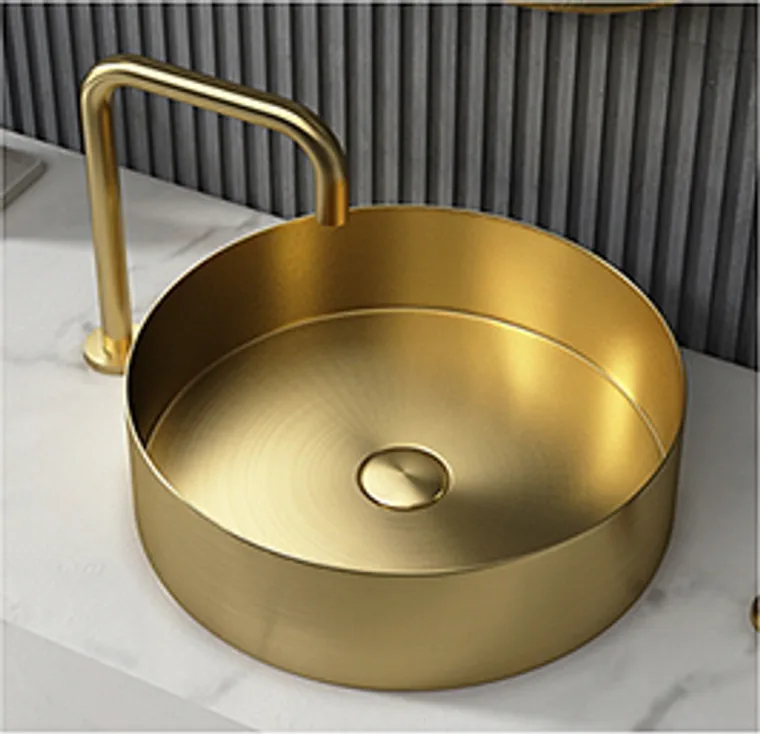
8802 Gold Flat Rim Countertop Basin
400 × 400 × 130 mm
Model 8802 is a project-ready flat rim stainless steel countertop basin for hotel vanities and commercial wash counters, with finish coordination available for hospitality procurement review.
8301 Gold Two-Tone Counter Basin
400 × 400 × 100 mm
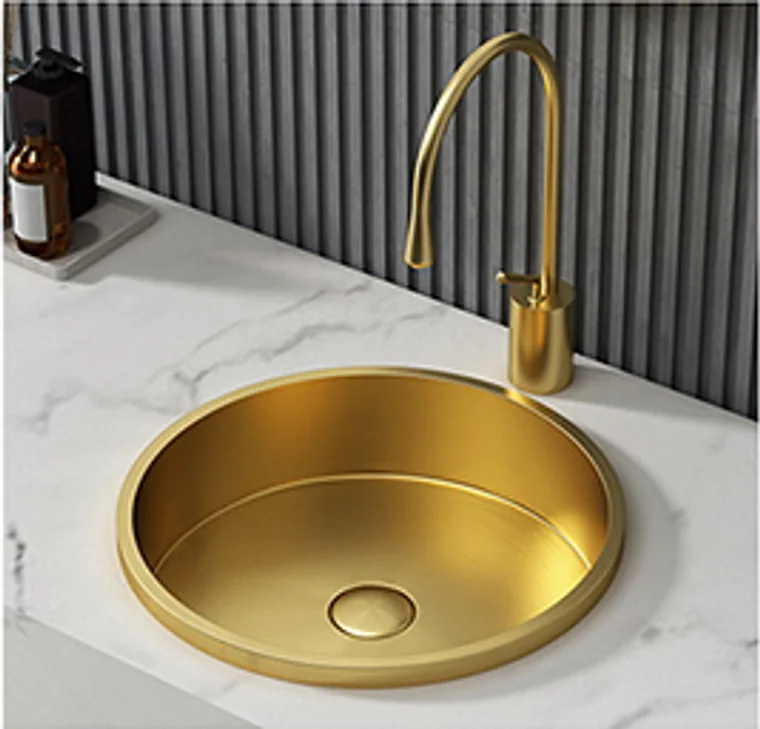
Model 8301 uses a two-tone stainless steel counter basin body with gold surface treatment for commercial hand wash counters and public restroom projects and for fixture replacement schedules.
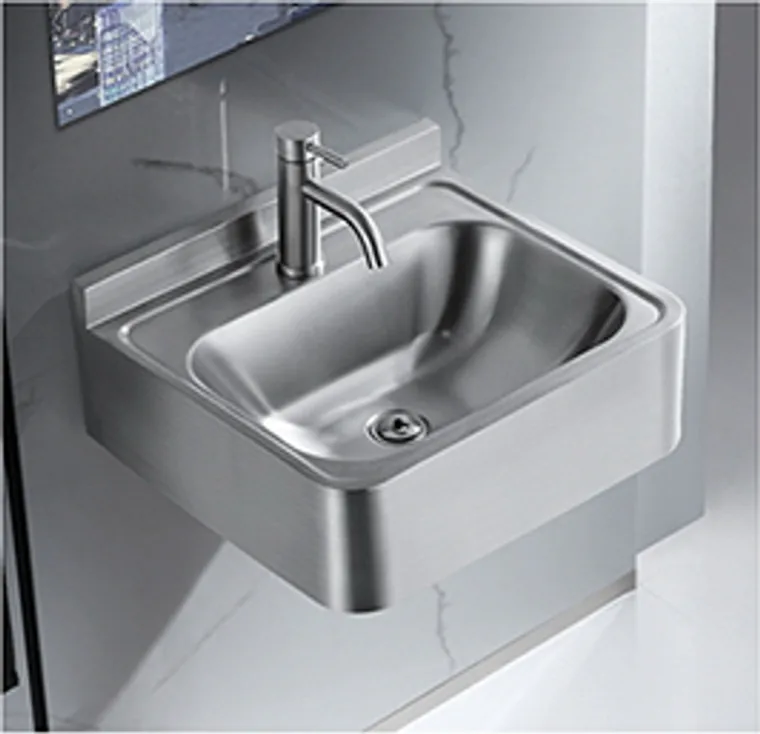
8201 Silver Vandal Resistant Wall Hung Basin
500 × 412 × 150 mm
Model 8201 is a project-ready vandal resistant stainless steel wall hung basin for compact public wash areas, with finish coordination available for distributor product selection.
Related Articles
More buying guides for this topic
Basins
Stainless Steel Wash Basin Buying Guide for Commercial Bathrooms
A stainless steel wash basin for commercial bathrooms should be reviewed by installation type, bowl size, drainage position and finish durability.
Basins
Stainless Steel Pedestal Basin: Applications, Benefits and Custom Options
A stainless steel pedestal basin is often selected when the basin needs to become a visible fixture rather than disappear into a vanity counter.
Basins
Stainless Steel Countertop Basin for Hotels, Villas and Commercial Washrooms
For hotels, villas and commercial washrooms, a stainless steel countertop basin gives designers flexibility while keeping the fixture practical for repeated cleaning.
FAQ
What information is needed before ordering stainless steel wash basins?
Send basin type, model number, dimensions, finish, quantity, installation method, drainage position, faucet requirement and any custom size or drawing.
Which basin type is best for commercial bathrooms?
It depends on wall support, counter design, cleaning access and interior layout. Pedestal, countertop, counter and wall-hung basins each solve different project needs.
Why is drainage position important for basin orders?
Drainage position affects trap space, counter cut-out, wall plumbing and installation work. A mismatch can delay installation or require site changes.
Should project buyers choose the cheapest basin model?
Not only by price. Buyers should also review cleaning access, installation method, finish durability, replacement access and project quantity.