Procurement · 2026-09-26 · 8 min read
Export Packaging for Stainless Steel Sanitary Ware: Reducing Damage Before Site Delivery
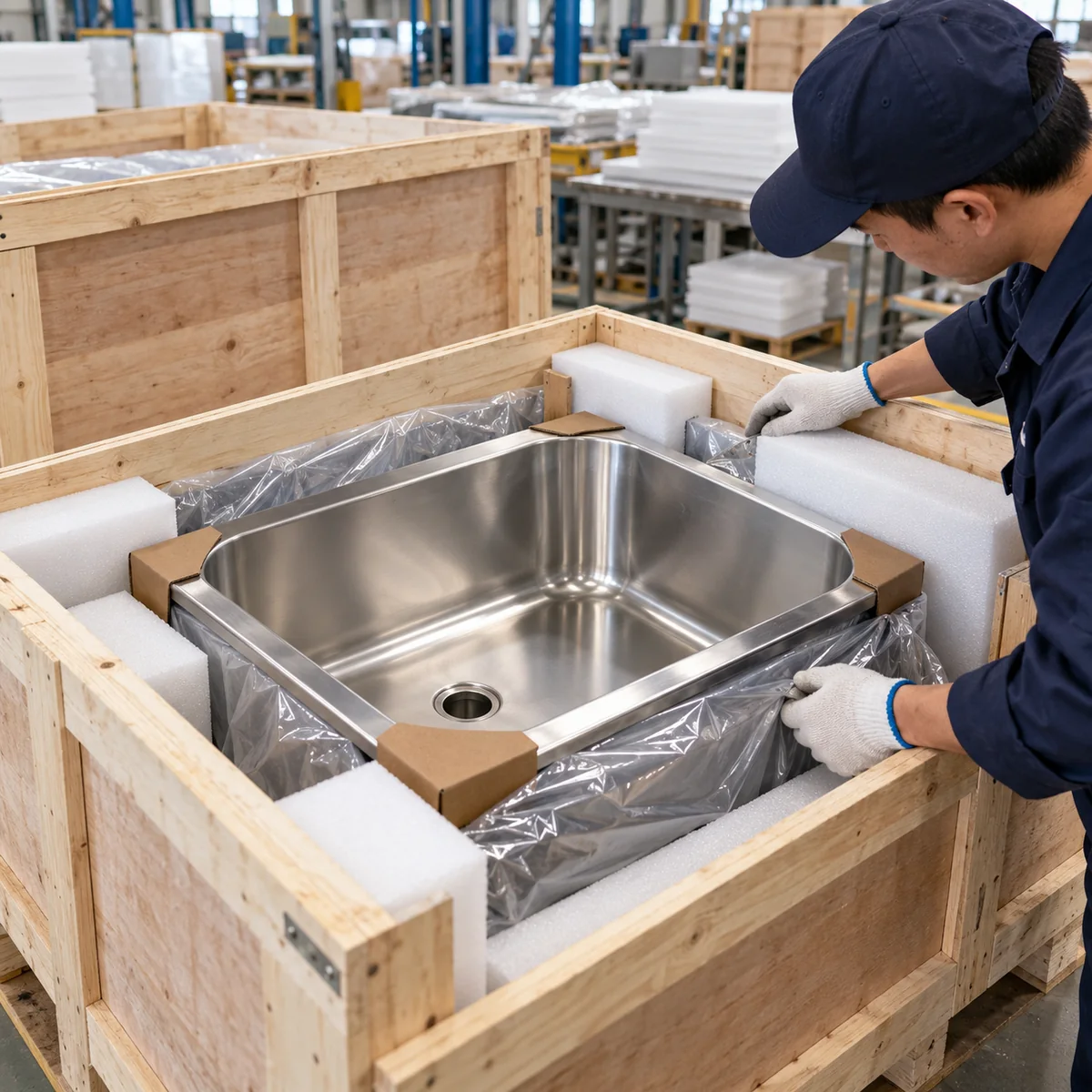
A fixture can pass final inspection and still arrive unusable if its rim carries the carton load, loose fittings move inside the bowl or the protective film traps abrasive dust.
Article Topics
Design the pack around the weak points
Packaging should respond to the shape of the fixture, not just its overall size. A thin rim, projecting waste connection, decorative face and loose bracket each fail in a different way. Mark the no-load zones and the surfaces that cannot rub before choosing foam or carton thickness.
The product should be restrained without being squeezed out of shape. Support belongs under strong structural areas, with clearance around drains, corners and finished edges. For a tall pedestal basin, the center of gravity and permitted orientation matter as much as surface protection.
Ask for packing photographs during sample approval. They reveal whether the product can move inside the box and whether accessories are separated from the visible finish.
Separate protection into layers
The first layer protects the finish from clean contact and dust. The next cushions shock and prevents movement. The outer carton or crate manages stacking, handling and puncture. Combining these jobs into one thin wrap usually leaves a gap in protection.
Protective film must be clean, compatible with the finish and removable after the expected journey and storage period. Film should not be treated as impact protection. Corners and rims need shaped material that stays in position when the package is turned.
Heavy brackets, wastes or valves should be boxed or fixed separately. A small metal fitting moving through a long sea shipment can damage a large basin even when the outer carton looks perfect.
Plan pallets and crates for the actual route
The route may include factory handling, container loading, port transfer, warehouse storage and final movement through an unfinished building. A pack designed only for the first forklift trip may not survive the last trolley ride to the washroom.
Confirm package dimensions and weight before booking transport. Long troughs and assembled institutional fixtures may need a crate that can be opened from a specific side. If the site has a narrow lift or doorway, check that the packed unit can reach its room.
Where timber packaging is used for international shipping, the buyer and forwarder should confirm applicable destination requirements. Treat compliance marks and shipping documents as logistics matters to verify for the route, not assumptions to copy from an earlier order.
Make every package identifiable without exposing the finish
Use the purchase order line, model, room or zone and package number in the packing record. If external labels are damaged, the receiving team should still be able to match the contents to the schedule without removing all protective material.
List accessories by package. A missing bracket discovered during installation can stop a room even when the main fixture arrived safely. For mixed projects, avoid putting several rooms' small parts into one untracked carton.
The stainless steel wash basin ordering checklist helps connect models and quantities before the packing plan is prepared.
Inspect at receipt and keep the evidence
Before signing an unchecked delivery as complete, inspect the outer pack for impact, water and tilt. Photograph damaged sides and the package identification before opening. Unpack carefully enough to preserve the sequence of layers; it may explain how damage occurred.
Check quantity, finish, model, accessories and visible condition. If the fixture will remain stored, restore suitable protection but avoid sealing moisture or construction grit against the surface. Store products in the orientation intended by the packing design.
For project-specific packing discussions, contact Honze with the model list, transport route and site handling limits.
Related Categories
Request a Quote
Looking for stainless steel sanitary ware for a commercial bathroom or public restroom project? Contact Honze Stainless Steel Products to discuss product models, dimensions, finishes and custom requirements.
Request a Quote for Your Commercial Bathroom ProjectRelated Products
Product models mentioned for project comparison

8702-2 Gold Slim Cylindrical Pedestal Basin
400 × 400 × 800 mm
Model 8702-2 uses a slim cylindrical stainless steel pedestal basin body with gold surface treatment for commercial washrooms and hospitality bathrooms and for premium lobby wash areas.

8802 Gold Flat Rim Countertop Basin
400 × 400 × 130 mm
Model 8802 is a project-ready flat rim stainless steel countertop basin for hotel vanities and commercial wash counters, with finish coordination available for hospitality procurement review.
8102 Gold Heavy-Duty Urinal
Custom size / see drawing
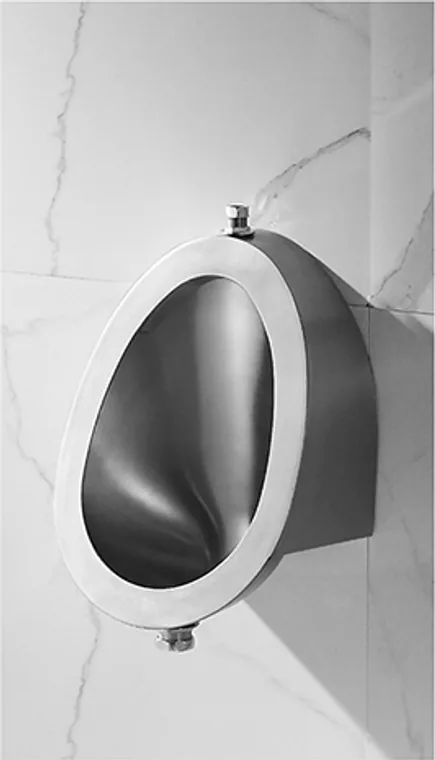
Model 8102 is a project-ready heavy-duty stainless steel urinal for commercial public restrooms, with finish coordination available for contractor specification lists.
Related Articles
More buying guides for this topic
Basins
What Project Buyers Should Check Before Ordering Stainless Steel Wash Basins
A stainless steel wash basin order should confirm model type, dimensions, drain position, mounting method, finish, quantity and cleaning access before quotation.
Custom Projects
How to Choose a Stainless Steel Bathroom Products Manufacturer
Choosing a stainless steel bathroom products manufacturer is not only a price comparison; buyers should review product matching, customization and communication details.
Custom Projects
Custom Stainless Steel Sanitary Ware for OEM, ODM and Project Buyers
Custom stainless steel sanitary ware is useful when a standard model cannot match the project layout, finish plan or installation requirement.
FAQ
Is protective film enough for shipping a stainless steel basin?
No. Film can protect the finish from light contact, but the package also needs cushioning, movement restraint and outer impact protection.
Should fittings be packed inside the basin?
Only if they are separately restrained and cannot contact the finish. Heavy loose fittings can cause damage during transport.
What should appear in a packing record?
Record the purchase order line, model, quantity, package number, accessories, dimensions, weight and destination zone where relevant.
What should the receiving team photograph?
Photograph package identification, all sides with visible damage, the opening sequence and any product or accessory damage.